


Engineering shapes the world we live in — it transforms ideas into infrastructure, problems into solutions, and challenges into progress. Yet civil engineering often suffers from a perception problem: it is seen as purely technical, distant from daily life, and disconnected from the human experience it ultimately serves.
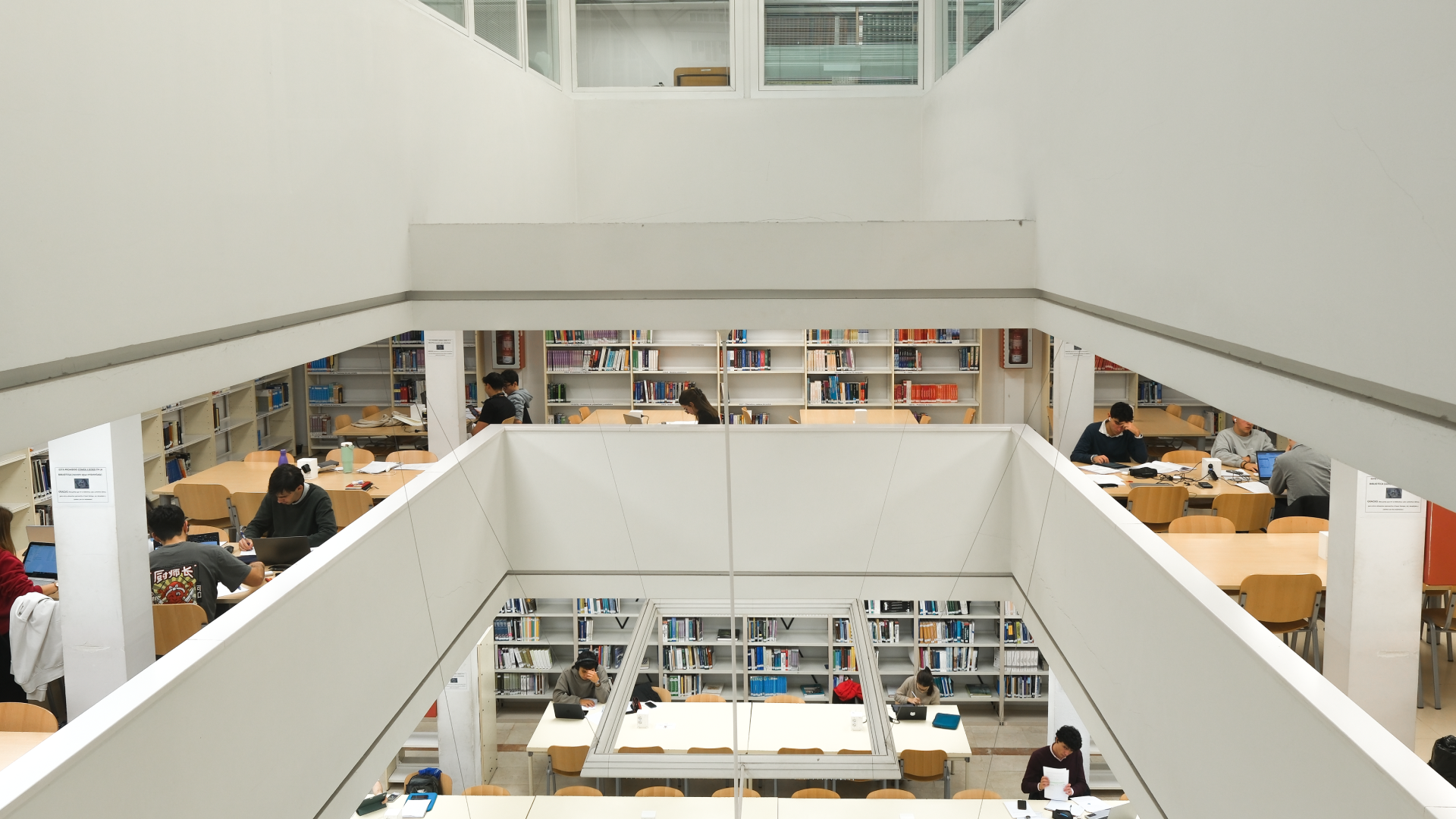
The Escuela Técnica Superior de Ingenieros de Caminos, Canales y Puertos at Universidad Politécnica de Madrid is a 200-year-old institution that stands as the historic birthplace of civil engineering in Spain. With international recognition and a legacy of groundbreaking infrastructure projects, the school has been the training ground for generations of engineers who have literally built the country. But it faced a crucial moment to reimagine its future. As the demands of the 21st century reshape what engineering means — demanding sustainability, digital transformation, and human-centered solutions — the institution needed to evolve from being solely an academic powerhouse into something more vital: a living ecosystem that connects students, industry, and society.
This transformation required moving beyond the traditional model of technical education. The school recognized that modern engineering isn't just about structures and calculations — it's about creating networks, fostering collaboration, and addressing complex social challenges. They envisioned themselves not as a static point of origin, but as an Ágora — a dynamic forum where diverse voices converge to reimagine the built environment.
We were invited to help define and express this new vision for Caminos UPM, repositioning civil engineering as a vital, connected, and profoundly human endeavor — all while honoring the technical rigor and extraordinary legacy that have defined them for two centuries.
Building the Foundation
We began by working closely with faculty, students, alumni, and industry partners to articulate a shared vision for the future. What emerged was a fundamental shift in perspective: from institution to ecosystem, from isolated expertise to connected intelligence, from training engineers to transforming engineering itself.
The challenge was clear — how do you balance the weight of the past with the lightness and agility required for the future? How do you appear both authoritative and approachable? How do you maintain technical precision while embracing warmth and humanity?
A System in Motion
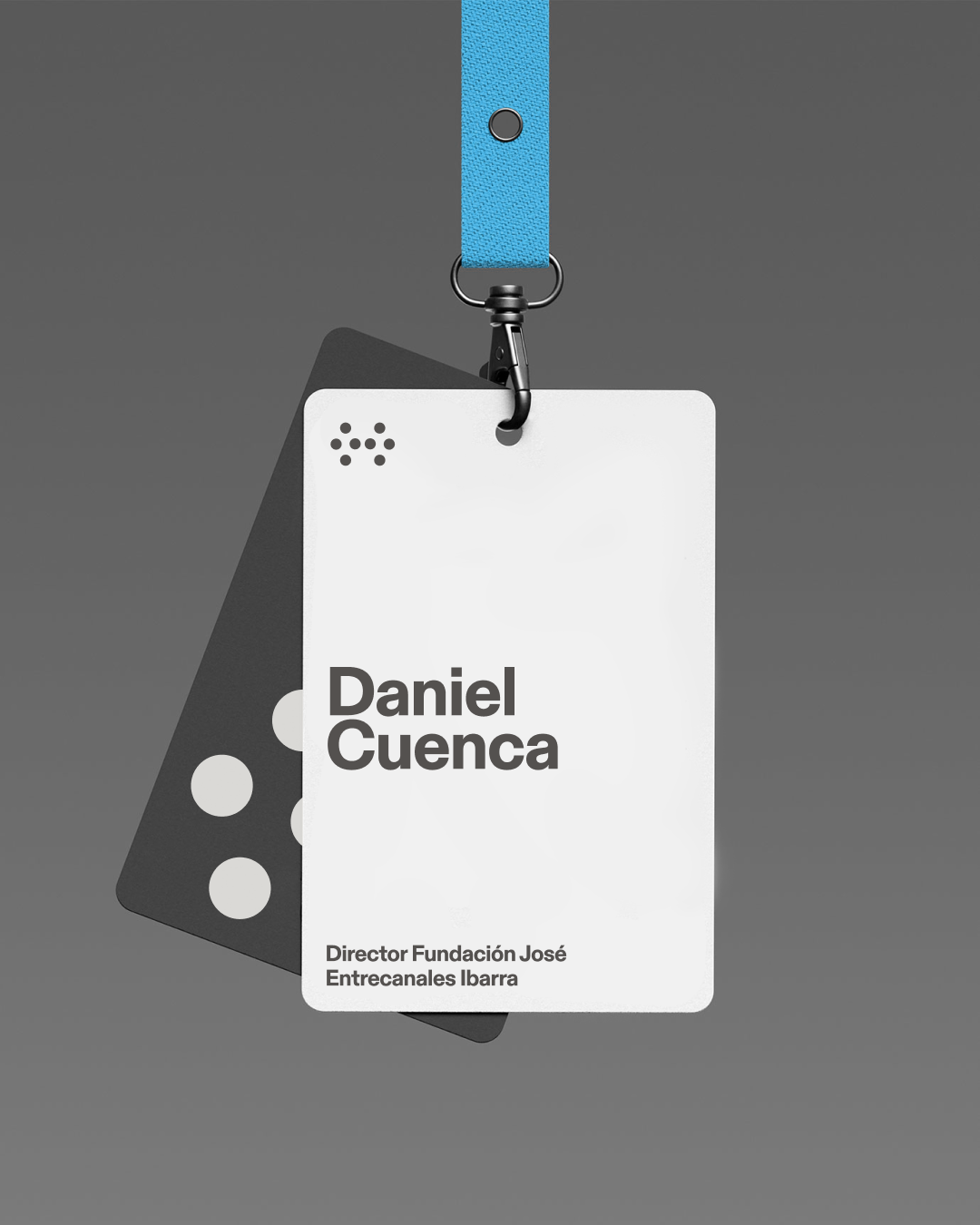
At the heart of our solution lies a deceptively simple visual language: the point. Not as a static mark, but as a node — a connector, an agent, a living element within a network. This became the DNA of the entire system.
We developed a visual identity that quite literally orbits. The logomark is constructed from interconnected points that move, transform, and respond to context — never static, always in dialogue. Just as the school connects students to professors, theory to practice, tradition to innovation, the identity visualizes connection as its core behavior.
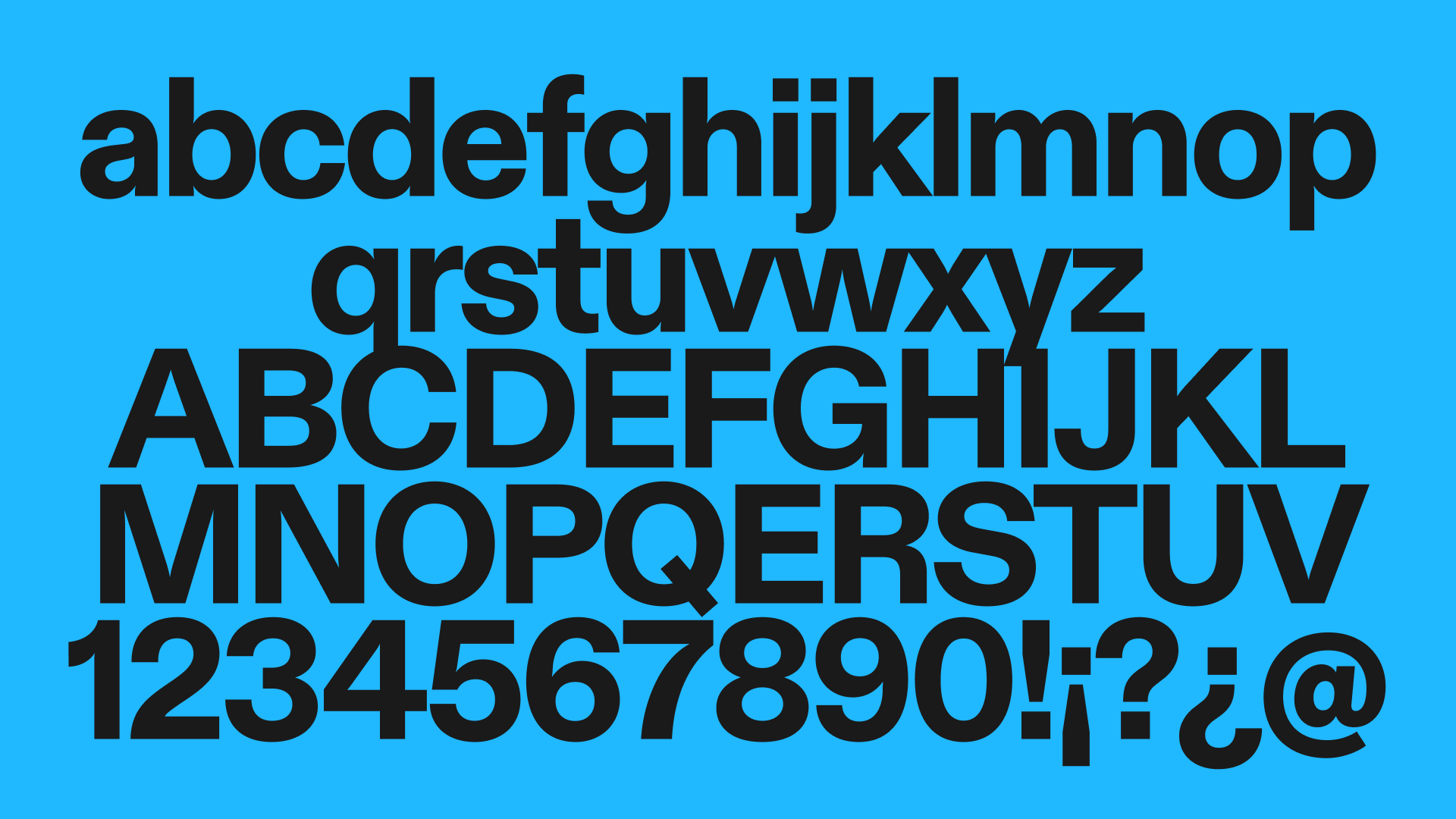
The typography — ABC Diatype — brings technical robustness with unexpected warmth. We customized the typeface, transforming the dots on the i and j into perfect circles, reinforcing the node concept at the most granular level. Every detail serves the idea.
The color system juxtaposes engineering precision with contemporary energy. A foundation of warm, technical grays grounds the identity, while Caminos UPM Blue — an electric, digital accent — signals a bold departure from traditional institutional blue.
Motion becomes meaning. Elements orbit with smooth, harmonic rhythms — quick accelerations and slow decelerations that feel both mathematical and organic. The logomark doesn't just sit on a page; it exists in perpetual transformation, just like the school itself.
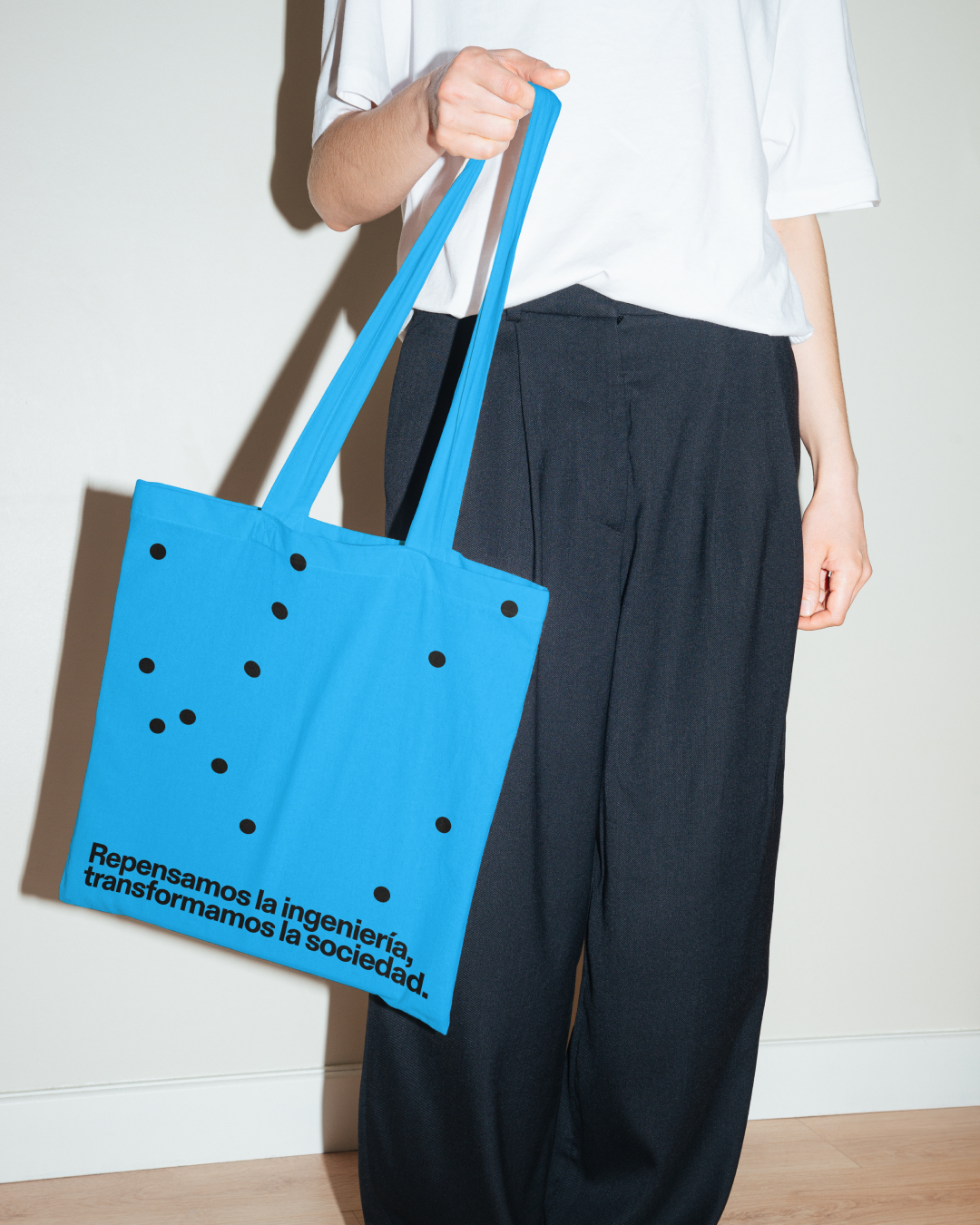
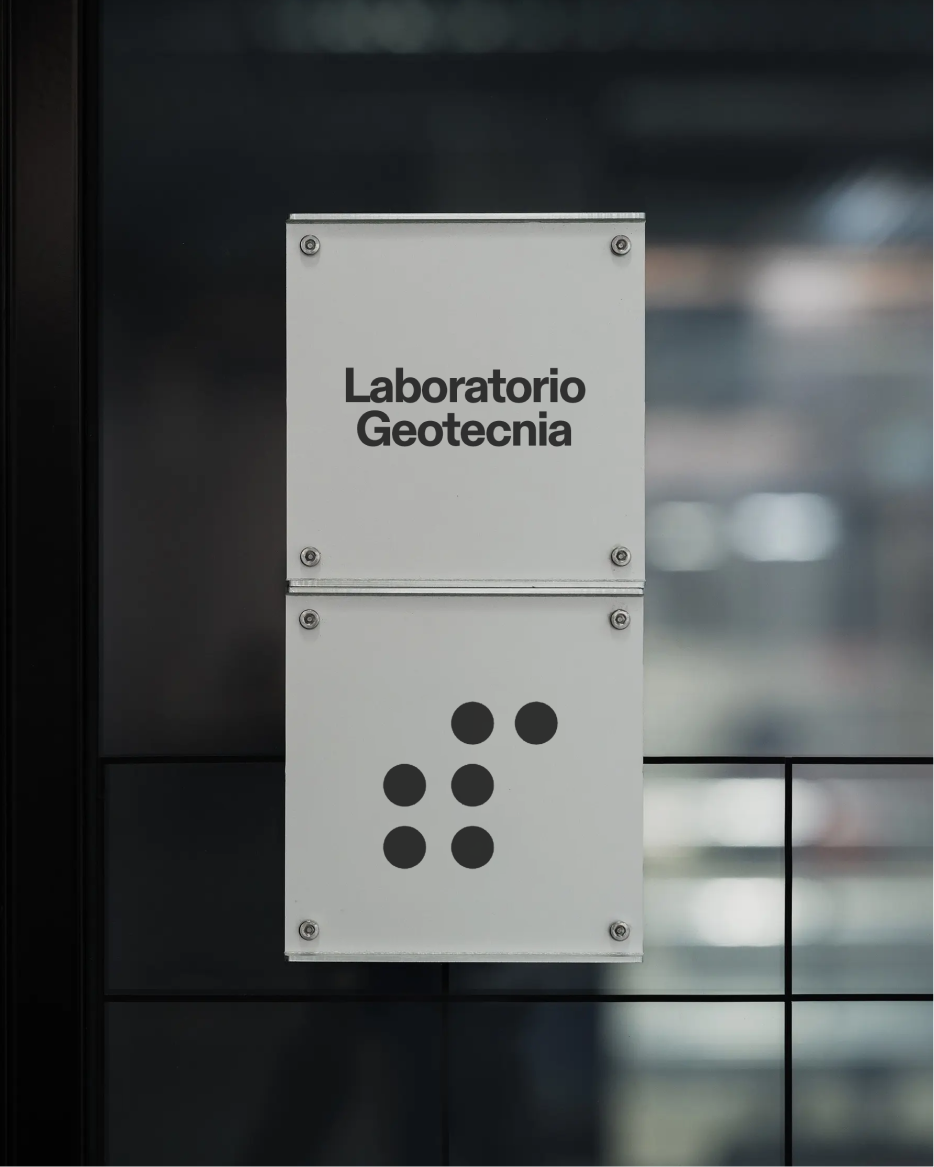
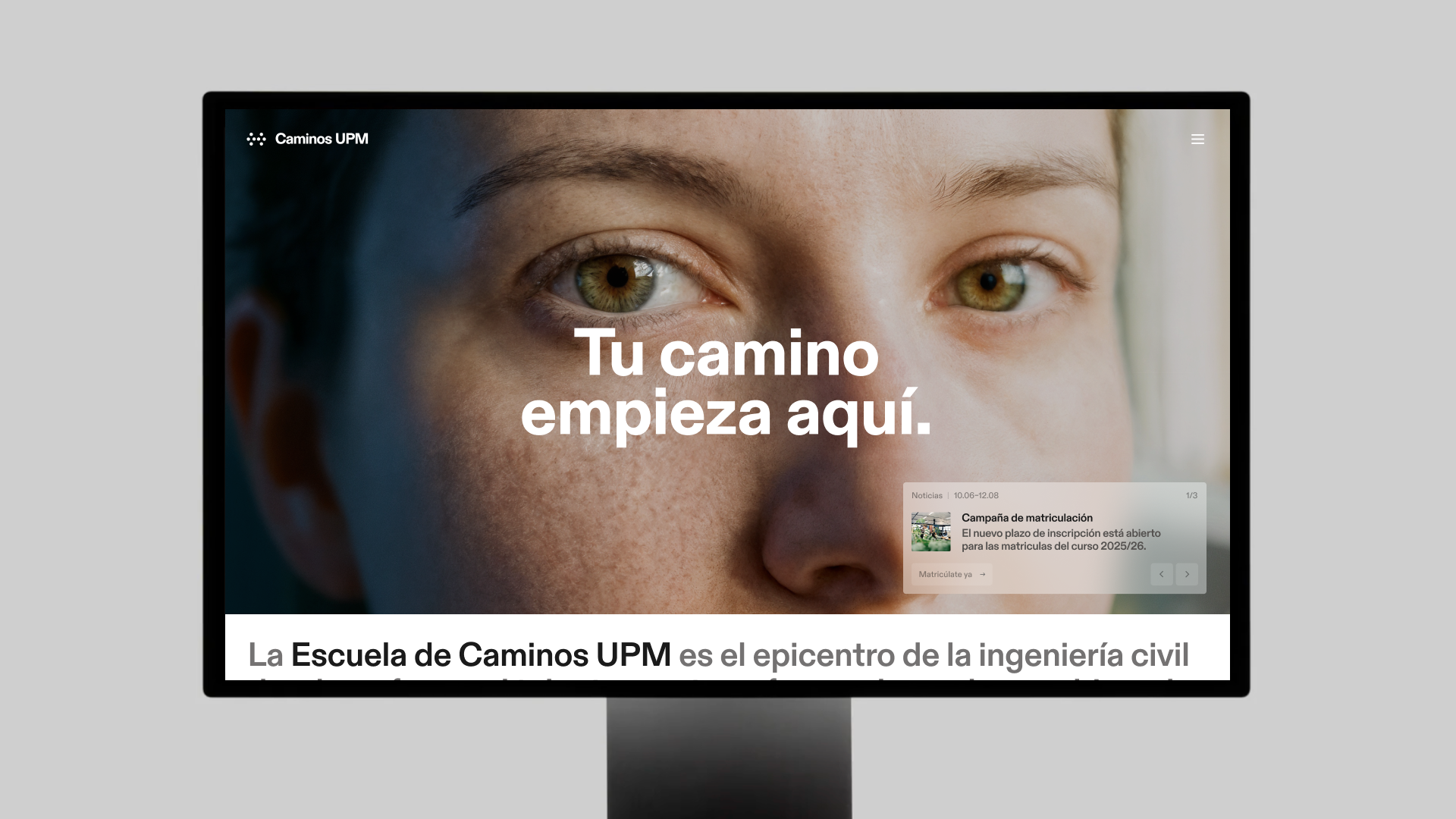
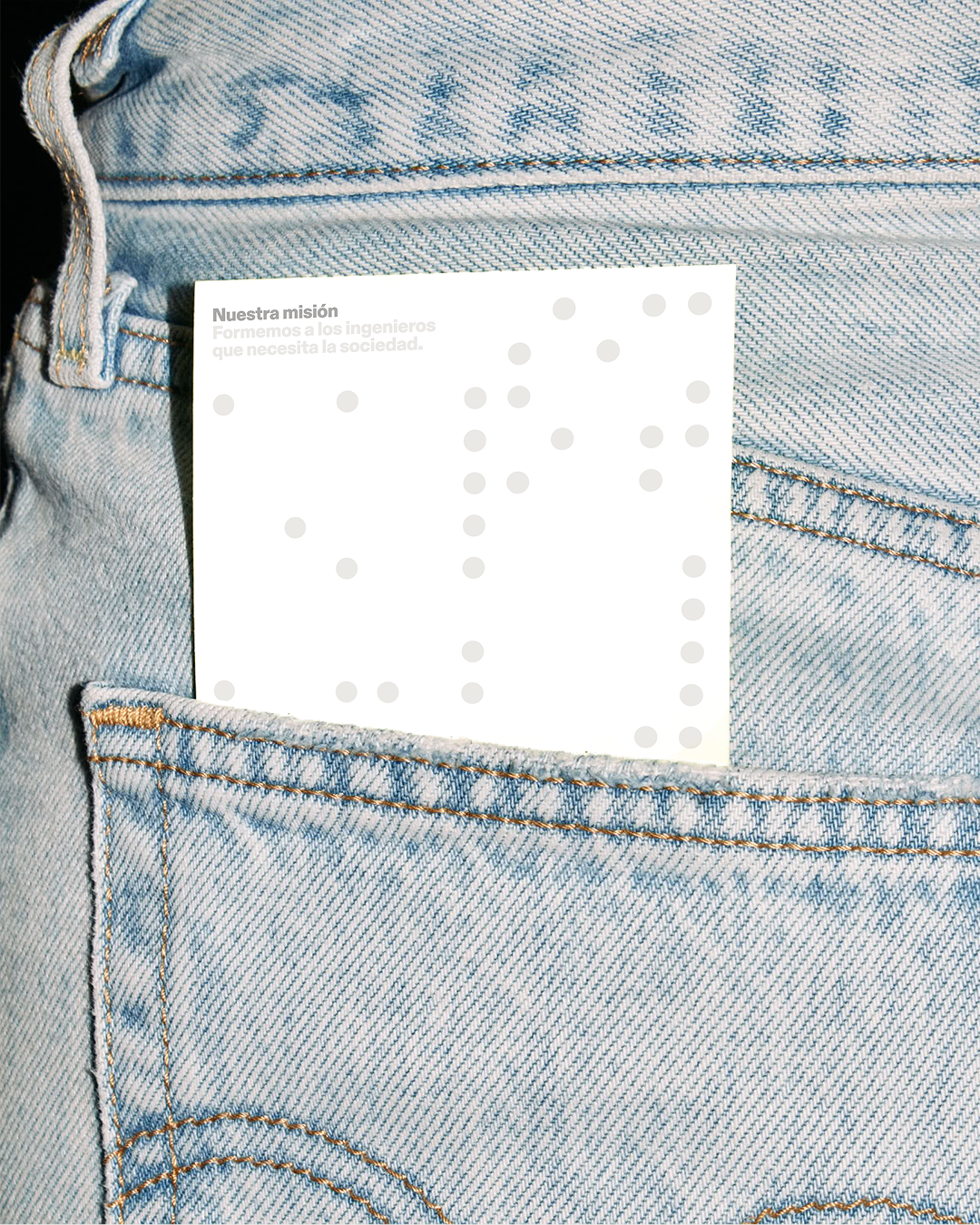
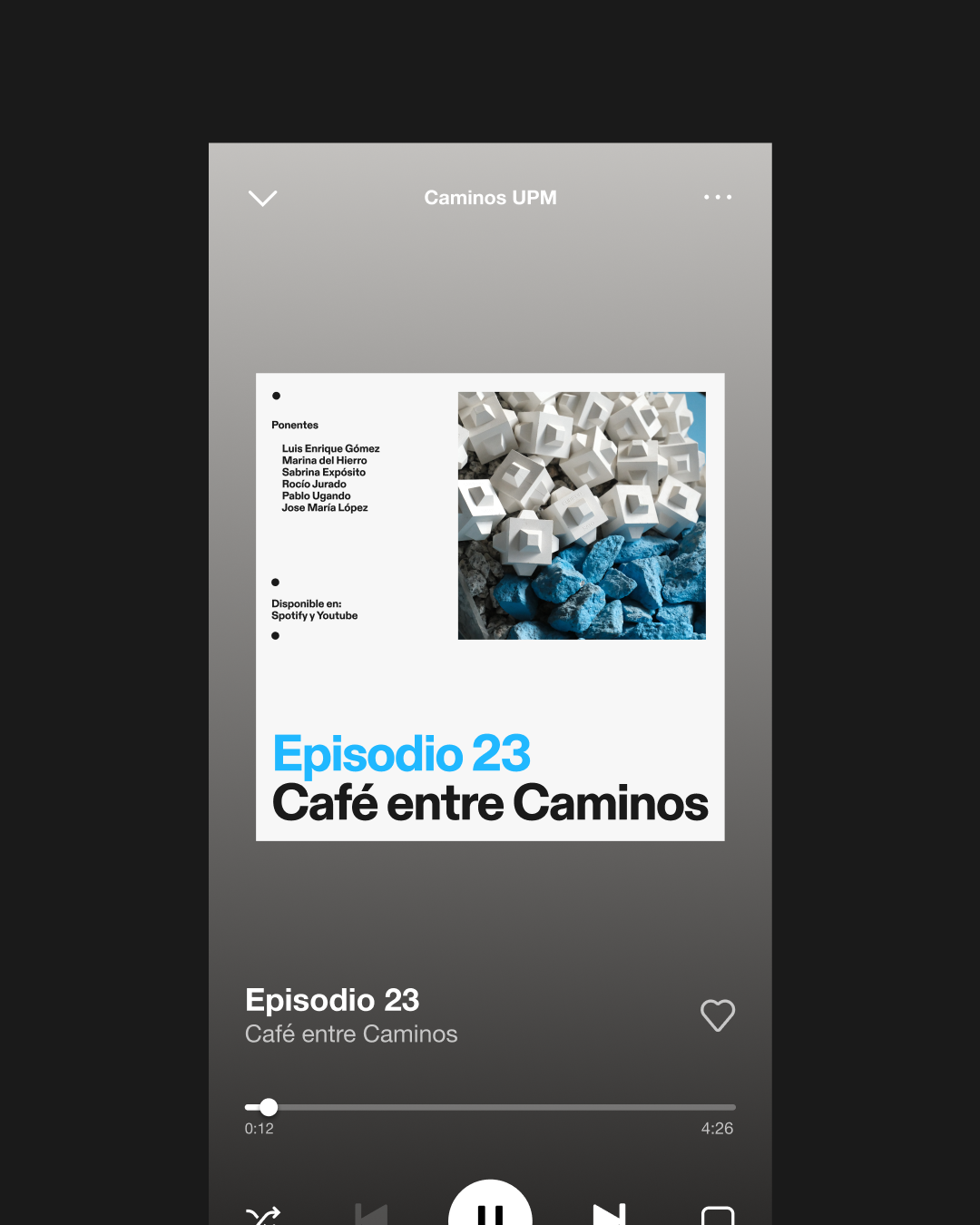
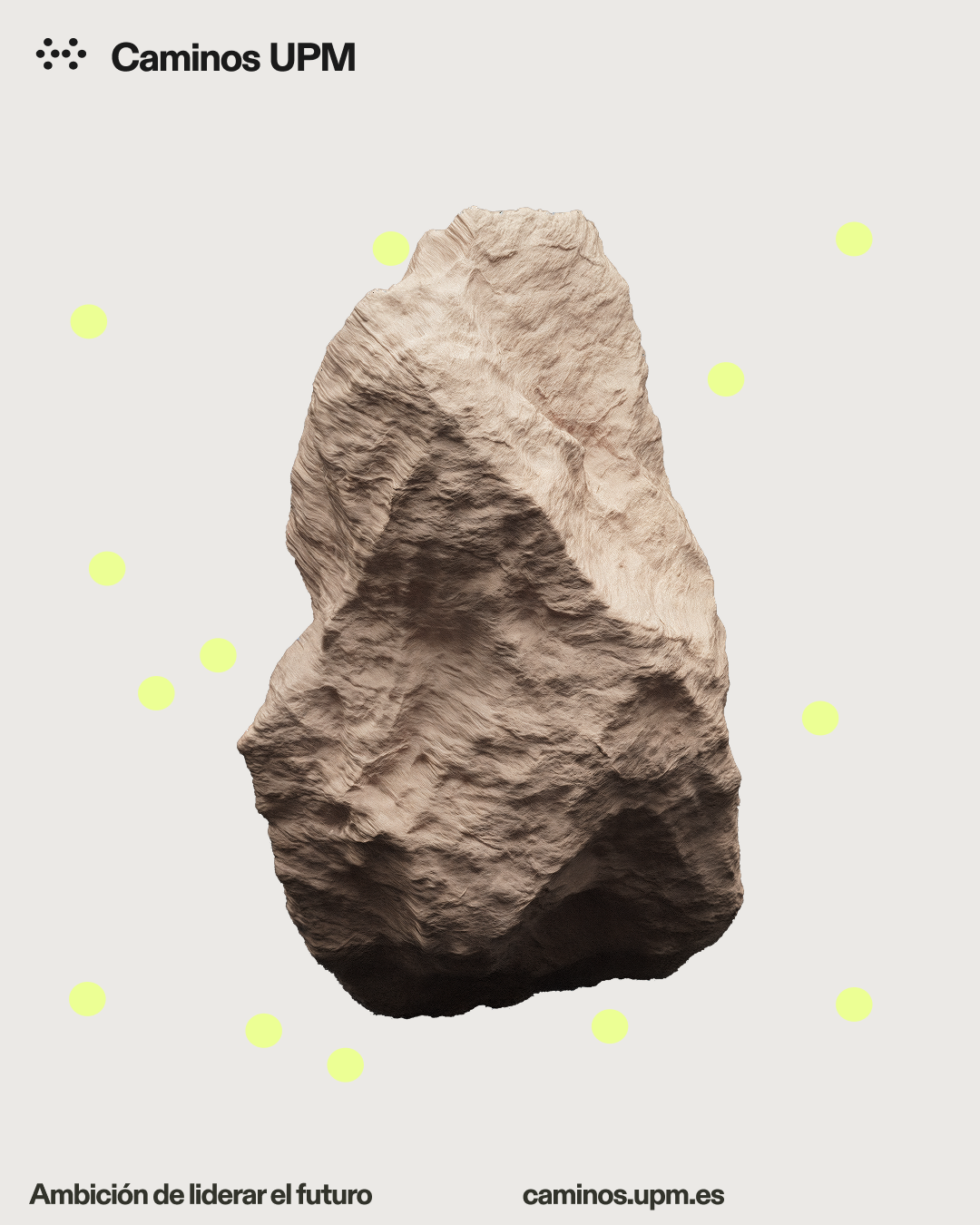
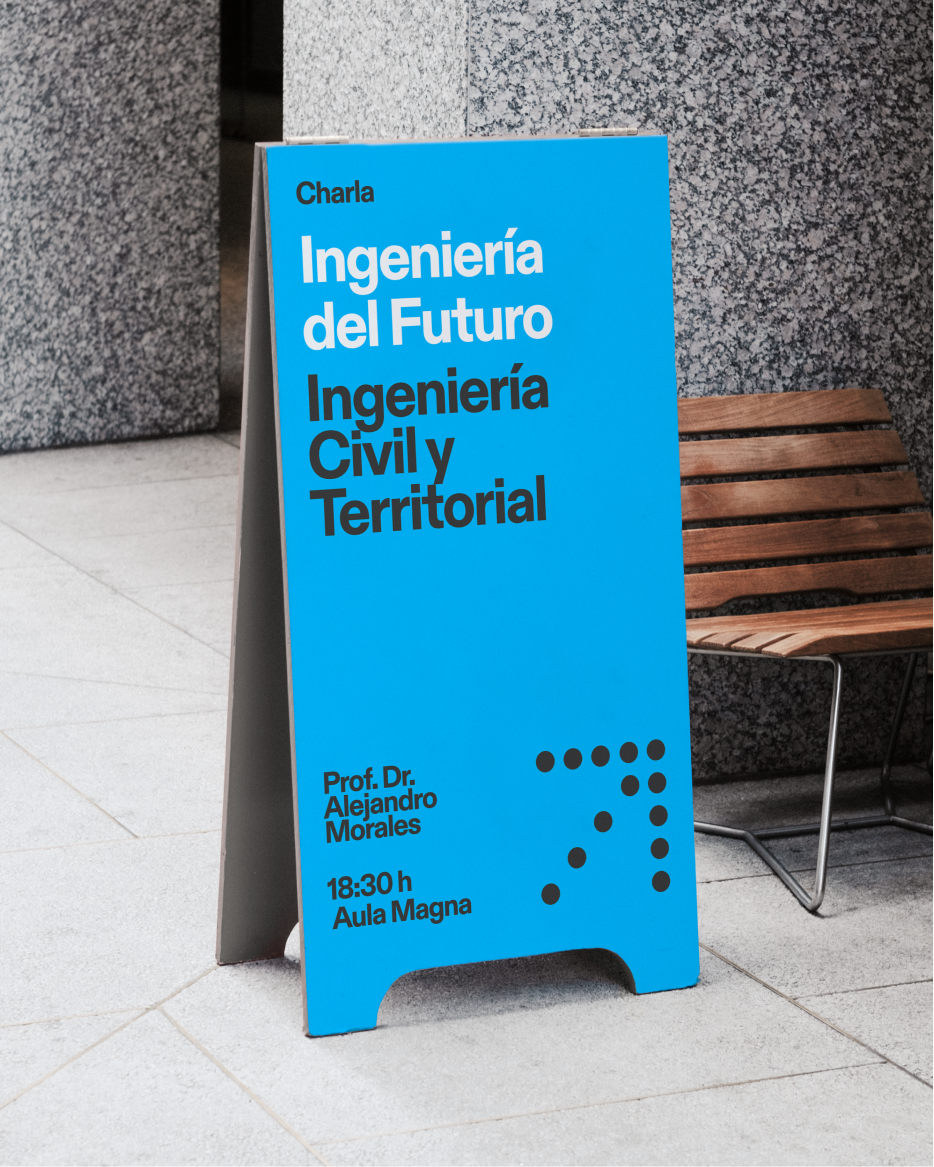
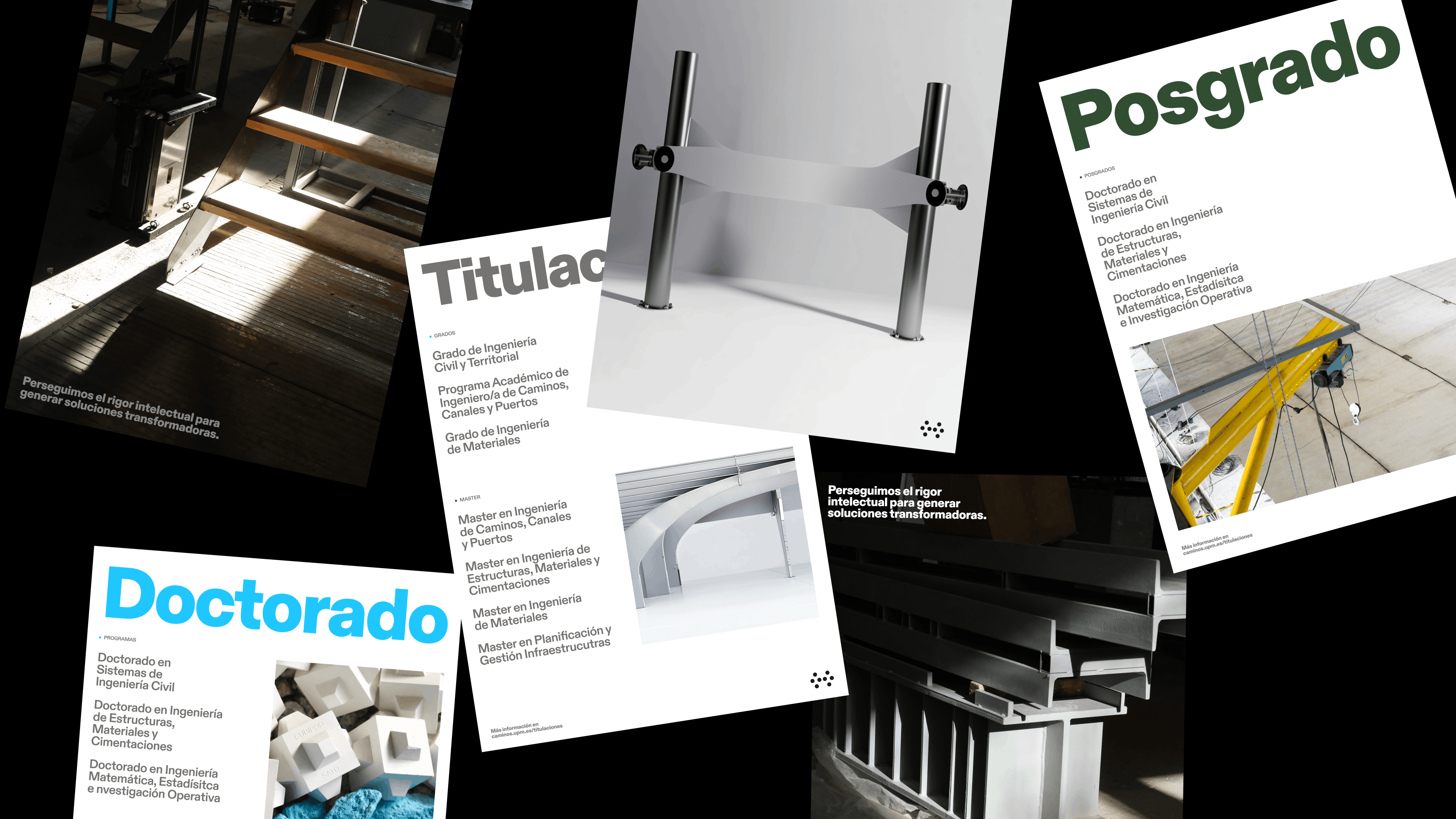
The pattern system may be our most radical expression. We created a generative dot matrix — randomly distributed points that represent the agents within the ecosystem: every student, every professor, every collaborator. This living pattern adapts across all applications, from websites to wayfinding, creating a visual language that is both systematic and infinitely flexible. We created a platform they could use to create patterns themselves.
Humanizing the Brand
We crafted a voice that breaks from the typically distant tone of academic institutions. The school now speaks in the first person plural — we create, we build, we advance. The language is inclusive, motivational, and narrative-driven. It doesn't just inform; it invites participation.
The personality we defined — Sage, Creator, Moderator — positions Caminos UPM as expert but accessible, rigorous but not elitist, authoritative but deeply human. Every piece of communication, from social media to ceremonial materials, now embodies this balance.
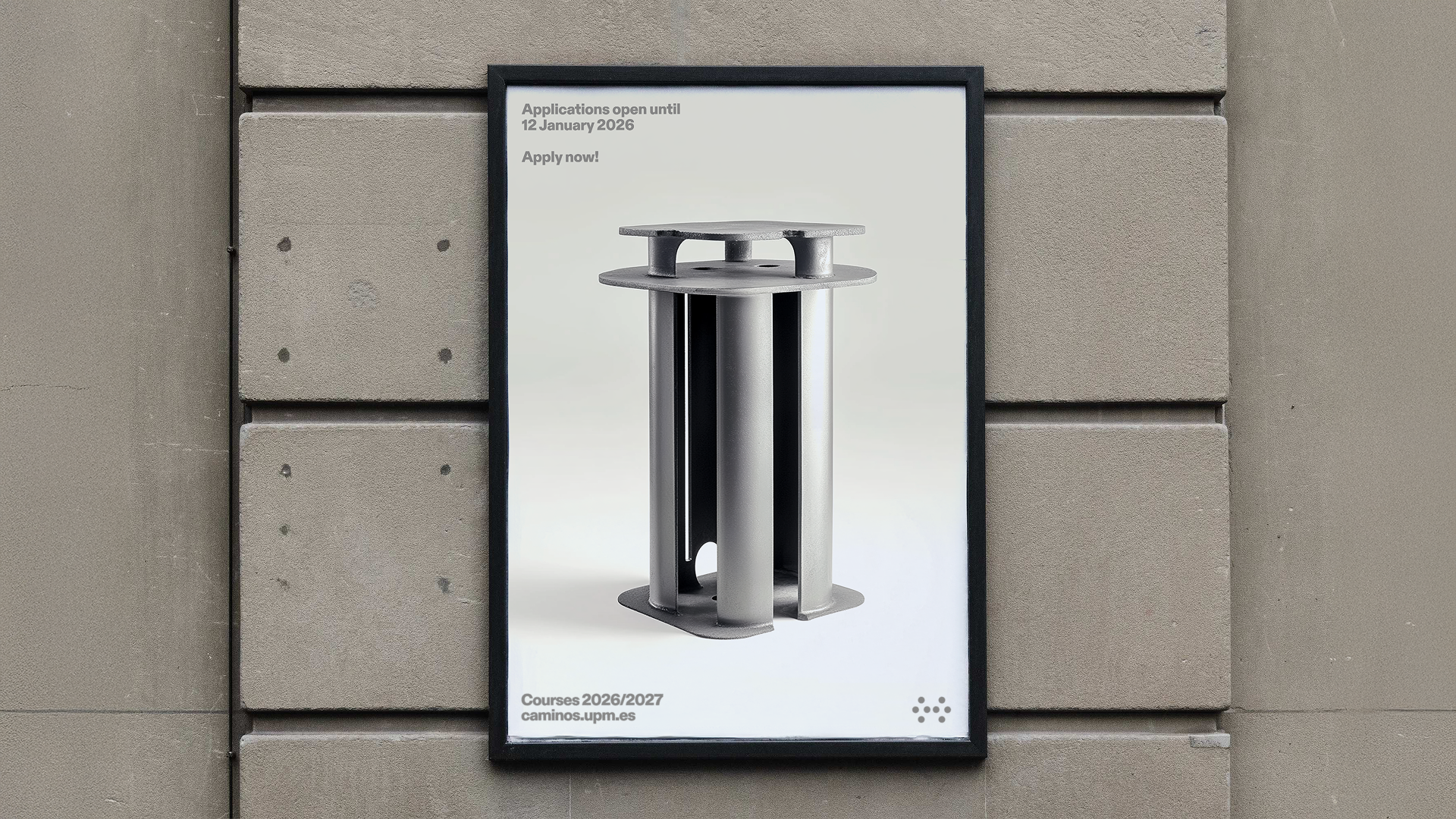
Photography embraces a warm, documentary style that captures human interaction and material detail without distortion. We see hands on models, students in collaboration, the texture of concrete and steel. The imagery reminds us that engineering, at its core, is made by people, for people.
Architecture for Complexity
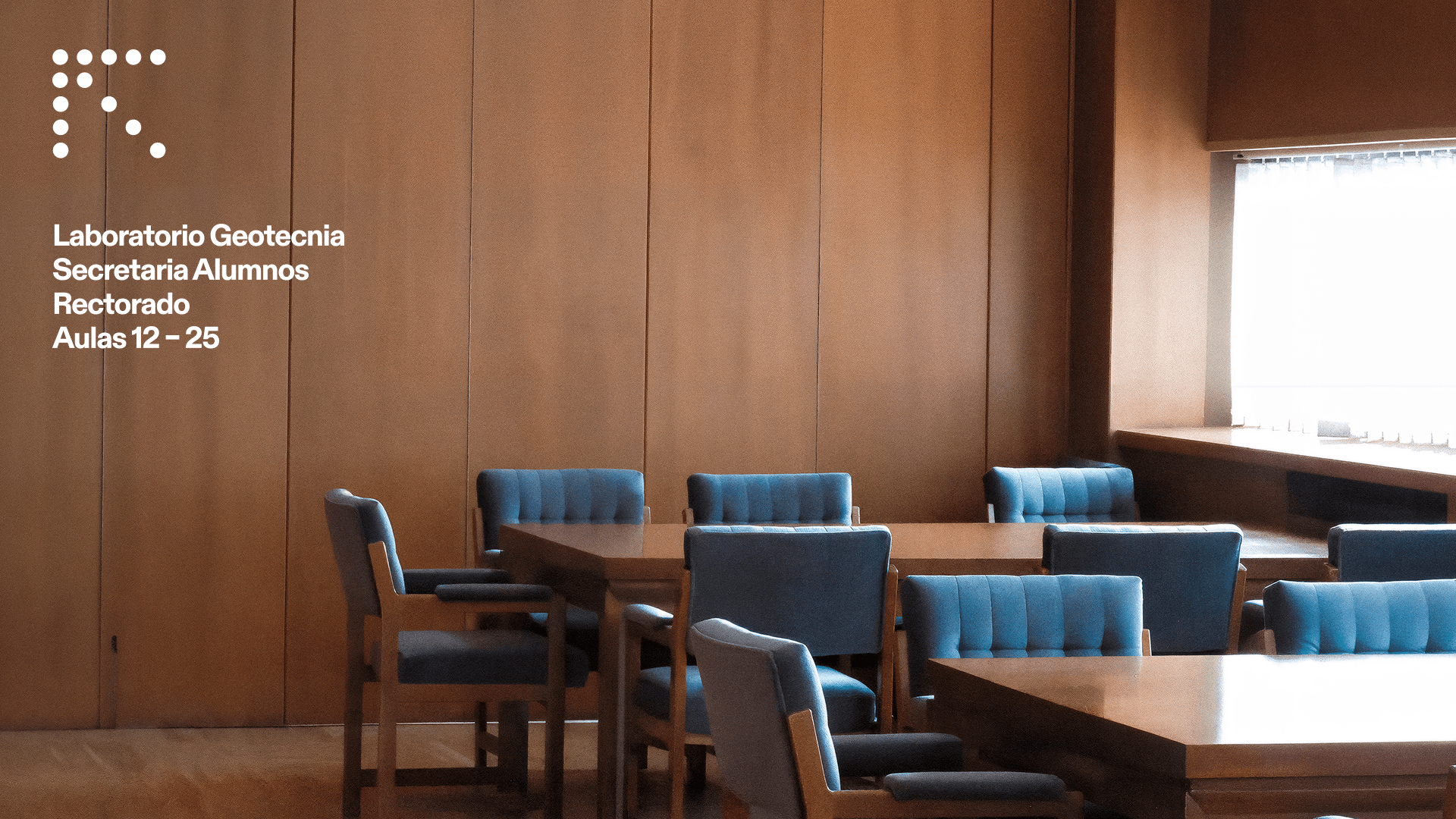
One of the project's functional challenges was bringing order to chaos. Caminos UPM encompasses numerous departments, laboratories, museums, and initiatives — each with its own sub-brand. We established a monolithic architecture that creates clear hierarchy while allowing flexibility. The dot-based icon system unifies everything under one visual language, making the complex ecosystem navigable and coherent.
Impact Beyond Identity
This isn't just a visual refresh. It's a cultural transformation.
Internally, the new identity has fostered a stronger sense of belonging. Students and faculty now identify as part of "Caminos" — a community, not just an institution.
Externally, the perception has shifted dramatically. A centuries-old school now feels fluid, contemporary, and essential to the future. The system has been adopted enthusiastically across departments, with templates and patterns being used correctly and creatively.
Functionally, events and digital engagement have increased as the school becomes what it envisioned: a true point of encounter, an Ágora for the transformation of civil engineering.
Building What Comes Next
We didn't design a static school. We designed an ecosystem in motion — one that visualizes the very connections that make transformative engineering possible.
In repositioning Caminos UPM, we've helped articulate a truth that extends far beyond one institution: that engineering is not cold calculation, but warm collaboration. Not isolated expertise, but connected intelligence. Not just building structures, but building the future through human connection.
We've been honored to work with the passionate community at Caminos UPM. Together, we hope we've created more than a brand — we've built a blueprint for how institutions can evolve without losing their soul, and how tradition can become the foundation for transformation.
Expertise
Mendesaltaren team
Paula Montoto
María Albillos
Engineering shapes the world we live in — it transforms ideas into infrastructure, problems into solutions, and challenges into progress. Yet civil engineering often suffers from a perception problem: it is seen as purely technical, distant from daily life, and disconnected from the human experience it ultimately serves.
The Escuela Técnica Superior de Ingenieros de Caminos, Canales y Puertos at Universidad Politécnica de Madrid is a 200-year-old institution that stands as the historic birthplace of civil engineering in Spain. With international recognition and a legacy of groundbreaking infrastructure projects, the school has been the training ground for generations of engineers who have literally built the country. But it faced a crucial moment to reimagine its future. As the demands of the 21st century reshape what engineering means — demanding sustainability, digital transformation, and human-centered solutions — the institution needed to evolve from being solely an academic powerhouse into something more vital: a living ecosystem that connects students, industry, and society.
This transformation required moving beyond the traditional model of technical education. The school recognized that modern engineering isn't just about structures and calculations — it's about creating networks, fostering collaboration, and addressing complex social challenges. They envisioned themselves not as a static point of origin, but as an Ágora — a dynamic forum where diverse voices converge to reimagine the built environment.
We were invited to help define and express this new vision for Caminos UPM, repositioning civil engineering as a vital, connected, and profoundly human endeavor — all while honoring the technical rigor and extraordinary legacy that have defined them for two centuries.
Building the Foundation
We began by working closely with faculty, students, alumni, and industry partners to articulate a shared vision for the future. What emerged was a fundamental shift in perspective: from institution to ecosystem, from isolated expertise to connected intelligence, from training engineers to transforming engineering itself.
The challenge was clear — how do you balance the weight of the past with the lightness and agility required for the future? How do you appear both authoritative and approachable? How do you maintain technical precision while embracing warmth and humanity?
A System in Motion
At the heart of our solution lies a deceptively simple visual language: the point. Not as a static mark, but as a node — a connector, an agent, a living element within a network. This became the DNA of the entire system.
We developed a visual identity that quite literally orbits. The logomark is constructed from interconnected points that move, transform, and respond to context — never static, always in dialogue. Just as the school connects students to professors, theory to practice, tradition to innovation, the identity visualizes connection as its core behavior.
The typography — ABC Diatype — brings technical robustness with unexpected warmth. We customized the typeface, transforming the dots on the i and j into perfect circles, reinforcing the node concept at the most granular level. Every detail serves the idea.
The color system juxtaposes engineering precision with contemporary energy. A foundation of warm, technical grays grounds the identity, while Caminos UPM Blue — an electric, digital accent — signals a bold departure from traditional institutional blue.
Motion becomes meaning. Elements orbit with smooth, harmonic rhythms — quick accelerations and slow decelerations that feel both mathematical and organic. The logomark doesn't just sit on a page; it exists in perpetual transformation, just like the school itself.
The pattern system may be our most radical expression. We created a generative dot matrix — randomly distributed points that represent the agents within the ecosystem: every student, every professor, every collaborator. This living pattern adapts across all applications, from websites to wayfinding, creating a visual language that is both systematic and infinitely flexible. We created a platform they could use to create patterns themselves.
Humanizing the Brand
We crafted a voice that breaks from the typically distant tone of academic institutions. The school now speaks in the first person plural — we create, we build, we advance. The language is inclusive, motivational, and narrative-driven. It doesn't just inform; it invites participation.
The personality we defined — Sage, Creator, Moderator — positions Caminos UPM as expert but accessible, rigorous but not elitist, authoritative but deeply human. Every piece of communication, from social media to ceremonial materials, now embodies this balance.
Photography embraces a warm, documentary style that captures human interaction and material detail without distortion. We see hands on models, students in collaboration, the texture of concrete and steel. The imagery reminds us that engineering, at its core, is made by people, for people.
Architecture for Complexity
One of the project's functional challenges was bringing order to chaos. Caminos UPM encompasses numerous departments, laboratories, museums, and initiatives — each with its own sub-brand. We established a monolithic architecture that creates clear hierarchy while allowing flexibility. The dot-based icon system unifies everything under one visual language, making the complex ecosystem navigable and coherent.
Impact Beyond Identity
This isn't just a visual refresh. It's a cultural transformation.
Internally, the new identity has fostered a stronger sense of belonging. Students and faculty now identify as part of "Caminos" — a community, not just an institution.
Externally, the perception has shifted dramatically. A centuries-old school now feels fluid, contemporary, and essential to the future. The system has been adopted enthusiastically across departments, with templates and patterns being used correctly and creatively.
Functionally, events and digital engagement have increased as the school becomes what it envisioned: a true point of encounter, an Ágora for the transformation of civil engineering.
Building What Comes Next
We didn't design a static school. We designed an ecosystem in motion — one that visualizes the very connections that make transformative engineering possible.
In repositioning Caminos UPM, we've helped articulate a truth that extends far beyond one institution: that engineering is not cold calculation, but warm collaboration. Not isolated expertise, but connected intelligence. Not just building structures, but building the future through human connection.
We've been honored to work with the passionate community at Caminos UPM. Together, we hope we've created more than a brand — we've built a blueprint for how institutions can evolve without losing their soul, and how tradition can become the foundation for transformation.


